
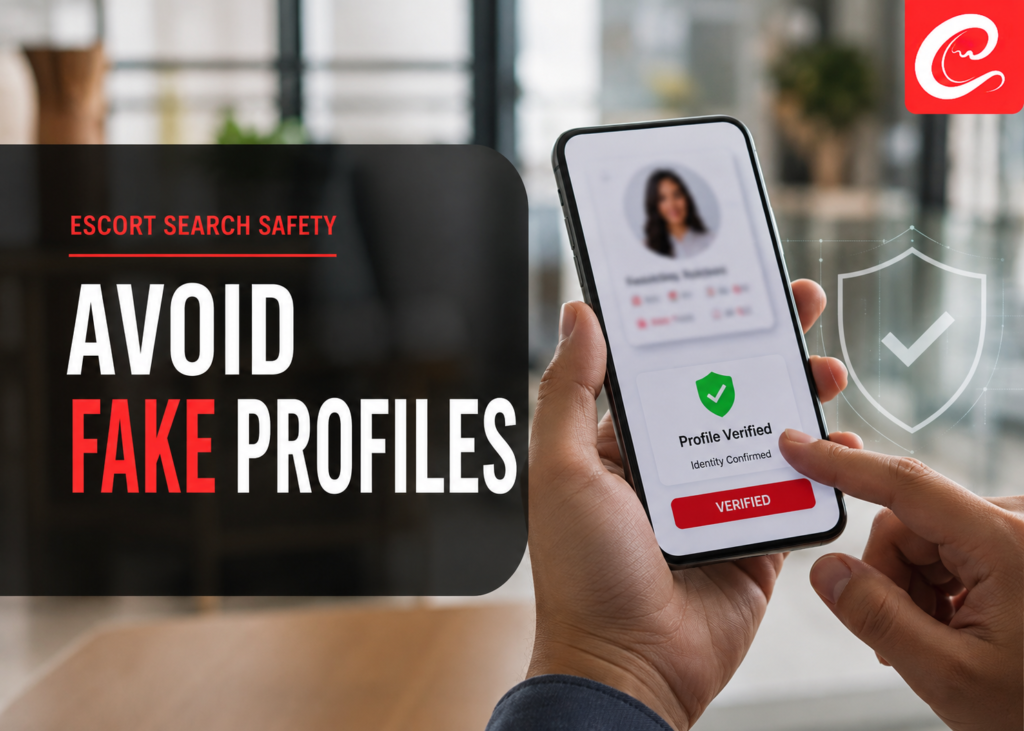
Searching online companionship listings can expose adults to impersonation, financial fraud, blackmail, identity theft, and misleading advertisements. Fake profiles often look convincing because scammers copy photographs, invent testimonials, create temporary phone numbers, and pressure users into making quick payments. A polished listing alone does not confirm that the person or agency behind it is genuine.
Adults searching the term Escort Service Indore should approach every profile as unverified until several independent checks support its authenticity. Safe screening involves examining photographs, communication patterns, payment requests, privacy practices, and inconsistencies in the listing. No verification method removes every risk, but careful decisions can significantly reduce exposure to common scams.
Why Are Fake Escort Profiles Common?
Online classified platforms and social networks make it easy to create listings without strong identity checks. A scammer may download attractive photographs, add a convincing description, and begin contacting potential victims within minutes. Once a profile gets reported or removed, the person can create another account using a different name and number.
Fake listings commonly exist to:
- Collect advance payments without providing any service
- Obtain personal photographs or private conversations for blackmail
- Steal banking, card, or digital-wallet information
- Redirect users to harmful links or imitation booking websites
- Gather phone numbers for repeated fraud attempts
- Promote unlawful or exploitative activities
- Pressure people into paying fabricated cancellation charges
- Impersonate independent providers or legitimate businesses
Recognising these motives helps adults evaluate listings based on evidence rather than appearance.
Start With a Reverse Image Search
Photographs are often the strongest attraction in a profile, but they are also among the easiest elements to steal. A reverse image search can show whether the same picture appears on unrelated websites, social accounts, modelling pages, or listings from several cities.
Search more than one photograph whenever possible. Scammers may mix stolen and original images to make detection harder. If the same person appears under different names, ages, locations, or contact details, the profile deserves immediate suspicion.
A reverse image search cannot prove that a listing is genuine. Some authentic users may reuse their own photographs across platforms, while newly stolen images may not yet appear in search results. Treat it as one screening method rather than final confirmation.
Examine Photograph Quality and Consistency
Look closely at backgrounds, lighting, clothing, facial features, tattoos, and room settings. A collection that appears to show different people may have been assembled from several sources. Extreme differences in image quality can also indicate copying.
Watch for heavily edited pictures that hide identifying details. Artificially generated faces may display unusual fingers, jewellery, reflections, teeth, hairlines, or background objects. These signs are not always obvious, so avoid making a decision from photographs alone.
A genuine profile may still use edited pictures for privacy. The central question is whether the person communicates honestly about what the photographs represent.
Check Whether the Description Matches the Profile
Scammers frequently copy descriptions from other listings without adjusting important details. Review the entire profile for conflicting information about age, language, location, availability, rates, or services.
Be cautious when:
- The city changes in different sections
- The stated age differs across platforms
- The description refers to another name
- Rates vary dramatically without explanation
- Contact numbers lead to unrelated identities
- The text contains copied references to another location
- The profile promises anything without reasonable boundaries
One inconsistency may be an editing mistake. Several inconsistencies indicate that the listing may be fabricated or controlled by someone other than the person shown.
Pay Attention to Communication Behaviour
The conversation often reveals more than the advertisement. A genuine adult should be able to answer reasonable questions consistently without using manipulation, threats, or excessive pressure.
Warning signs include vague replies, repeated scripted messages, refusal to address basic inconsistencies, and constant urgency. Some scammers avoid live communication because they cannot convincingly impersonate the person shown in the photographs.
Be alert if the contact:
- Refuses every reasonable verification option
- Sends identical answers regardless of the question
- Changes identity details during the conversation
- Demands immediate payment to “prove seriousness”
- Becomes aggressive when asked about safety
- Sends suspicious links or unknown application files
- Pressures you to share private photographs
- Claims that police action will follow unless money is paid
End communication if intimidation begins. Continuing the exchange often gives the scammer more information to misuse.
Request Privacy-Respecting Verification
Verification should protect both parties. It should never require anyone to reveal government identification, home addresses, workplace information, or other sensitive records to a stranger.
A short, mutually agreed live interaction may help establish that the person communicating resembles the profile. However, some legitimate adults avoid video calls because of privacy, recording, harassment, or facial-recognition concerns. Refusal alone does not prove fraud.
Consider the full pattern. A person who declines video but communicates consistently, explains privacy boundaries, and offers another reasonable confirmation method differs from someone who refuses all checks while demanding money.
Never secretly record verification calls or distribute screenshots. Consent and privacy remain important during screening.
Treat Advance Payment Requests Carefully
Advance-payment fraud is one of the most frequent risks associated with online companionship listings. The scammer requests a deposit, security fee, registration charge, hotel confirmation amount, transport cost, or refundable verification payment. After receiving it, the person disappears or invents another charge.
No payment request should override your judgement. High-pressure language such as “pay within five minutes” is designed to prevent careful checking. Claims that a payment is fully refundable do not make it safe.
Never provide:
- Card numbers or security codes
- Banking passwords
- One-time passwords
- Digital-wallet PINs
- Screen-sharing access
- Remote-device access
- Cryptocurrency recovery phrases
- Copies of financial statements
Do not scan unknown payment QR codes without confirming the recipient details. A QR code can initiate a payment; it does not automatically allow someone to send money to you.
Watch for Repeated Additional Charges
A common scam begins with a relatively small deposit. Once the first payment succeeds, the scammer demands additional money for security, membership, police clearance, room access, cancellation, or identity verification.
The victim may continue paying because losing the first amount feels unacceptable. This is known as escalation through sunk-cost pressure. Sending more money rarely recovers the earlier payment.
Stop immediately when unexpected charges appear. Save the messages and transaction details. Contact the relevant bank or payment provider as soon as possible to ask whether the transfer can be flagged or reversed.
Protect Your Identity and Digital Privacy
Personal information can be more valuable to criminals than a one-time payment. A phone number, workplace, address, photograph, and social profile may provide enough material for impersonation or blackmail.
Use strong privacy settings on messaging and social platforms. Hide profile photographs, activity status, personal email addresses, and public friend lists from unknown contacts. Avoid using a work number or an account connected to professional profiles.
Do not send intimate images. If you choose to share any personal photograph, remove visible documents, vehicle numbers, workplace details, family pictures, and location clues. Metadata may also contain device or location information, depending on how the file is shared.
Be Careful With Links and Booking Websites
Fake profiles may direct users to imitation websites that collect card data, identification documents, or login credentials. The page may resemble a real booking platform while using a slightly altered web address.
Before entering information:
- Check the complete domain name
- Look for misspellings or extra characters
- Avoid links shortened by unknown services
- Do not install applications from message attachments
- Never accept requests for remote access
- Check whether contact information is consistent
- Leave pages that trigger aggressive pop-ups
A padlock symbol only indicates an encrypted connection. It does not prove that the website owner is honest.
Recognise Blackmail and Extortion Attempts
Some fake profiles aim to obtain compromising chats, photographs, video recordings, or evidence of contact. The scammer then threatens to send the material to family members, employers, or social contacts.
Do not negotiate endlessly or keep paying. Payments may encourage further demands because the offender sees that pressure is working. Stop responding, preserve evidence, secure your accounts, and report the threat through appropriate cybercrime and platform channels.
Change passwords if you shared credentials or clicked suspicious links. Enable multi-factor authentication on email, social media, cloud storage, and financial accounts. Inform trusted people if the threat involves impersonating you or contacting your network.
Consider Safety Beyond Profile Authenticity
A genuine profile does not automatically mean an interaction is safe. Adults should consider consent, health, privacy, personal boundaries, legal restrictions, location security, and the possibility of coercion or exploitation.
Avoid any listing involving a person who may be under 18. Claims about age should never be ignored when photographs, communication, or circumstances raise doubts. End contact if another person appears to control the conversation, movement, money, or identification of the individual advertised.
Never proceed when consent seems uncertain or impaired. Alcohol, drugs, intimidation, trafficking, or third-party control can make meaningful consent impossible. Personal interest does not justify overlooking warning signs.
Compare Information Across Independent Sources
A profile should not be considered verified merely because it appears on several websites. Scammers often publish the same material across many platforms. Look for independent consistency rather than repetition.
Compare names, phone numbers, profile creation dates, photographs, writing style, and location information. Search the phone number with quotation marks and review whether it appears in scam warnings or unrelated advertisements.
Online reviews also require caution. Fake operators can create their own testimonials, while competitors may post dishonest complaints. Reviews are more useful when they contain specific, balanced details and come from established accounts rather than newly created profiles.
Create a Personal Stop List
People make poorer decisions when they feel rushed, embarrassed, emotionally invested, or afraid of losing money. A written stop list establishes boundaries before those pressures arise.
End the interaction if any contact:
- Requests financial passwords or one-time codes
- Threatens exposure, arrest, or physical harm
- Demands repeated unexplained payments
- Appears to involve a minor
- Shows signs of coercion or trafficking
- Sends malware or requests device access
- Refuses to respect consent or boundaries
- Uses clearly stolen identity material
Leaving early is safer than trying to prove that every suspicion is correct.
What Should You Do After Finding a Fake Profile?
Capture screenshots of the advertisement, messages, phone number, payment request, username, website address, and transaction reference. Do not alter the evidence. Record the date and approximate time of each interaction.
Report the profile to the platform where it appeared. If money, threats, identity theft, hacking, or sexual extortion are involved, report the incident through relevant cybercrime or law-enforcement channels. Contact your bank or payment provider promptly after an unauthorised or fraudulent transaction.
Block the account only after preserving useful evidence. Review your privacy settings and warn trusted contacts if the offender may impersonate you. Quick action can limit further financial and reputational harm.
Final Safety Perspective
Fake profiles succeed by combining attractive images, urgency, secrecy, and emotional pressure. Adults can reduce risk by slowing down, checking photographs, comparing details, protecting personal information, refusing suspicious payments, and ending conversations when manipulation appears.
No listing, testimonial, video call, or verification badge guarantees safety. Use several checks together and respect the privacy and consent of everyone involved. When a situation feels inconsistent or coercive, stepping away remains the safest response.
Frequently Asked Questions
Does a video call prove that a profile is genuine?
A live call may show that the person resembles the photographs, but it cannot confirm every claim, intention, or circumstance. Recorded video, impersonation, or third-party control may still be involved. Use live interaction as one screening step while checking profile history, communication, payment behaviour, consent, and other available evidence carefully.
Is paying a booking deposit safe?
Any advance payment carries risk, particularly when requested by an unknown contact. Fraudsters may describe deposits as refundable security, registration, travel, or verification fees. Never pay under pressure or disclose banking credentials. If unexpected charges follow the first payment, stop, preserve evidence, and contact your financial provider immediately for assistance.
What information should I never share?
Never share banking passwords, card security codes, one-time passwords, wallet PINs, government identification copies, home addresses, workplace details, or intimate photographs with an unverified contact. Limit access to social profiles and family information. Even harmless-looking details can support impersonation, account recovery attacks, stalking, financial fraud, or blackmail attempts later.
Can reviews confirm whether a profile is authentic?
Reviews can provide context, but they do not guarantee authenticity. Scammers may publish fabricated testimonials or copy reviews from other listings. Examine reviewer history, dates, writing patterns, and specific details. Give more weight to consistent evidence from independent sources than to repeated praise appearing only on websites controlled by the advertiser.
What should I do if someone threatens to expose my messages?
Stop sending money or additional material, preserve screenshots, secure your accounts, and report the threat through appropriate platform and cybercrime channels. Change passwords and enable multi-factor authentication. Consider warning trusted contacts if impersonation is possible. Repeated payments rarely stop extortion and may lead to larger demands from the offender.
Why do scammers ask for multiple small payments?
Small initial requests feel less risky and help scammers test whether a target will cooperate. After payment, they invent additional fees for security, transport, membership, cancellation, or verification. This escalation exploits the victim’s desire to recover previous money. Stop when new charges appear rather than paying to protect an earlier loss.
Are verified badges on listing websites reliable?
A badge may indicate that a platform completed certain checks, but verification standards vary considerably. Accounts can be compromised, documents can be misused, and profile details can change after approval. Review what the badge actually represents and continue checking photographs, communication, payment demands, identity consistency, consent, and safety warning signs independently.
How should a suspicious listing be reported?
Save the profile address, screenshots, usernames, phone numbers, messages, transaction references, and payment details. Report the account through the hosting platform’s fraud or safety system. For financial loss, threats, hacking, identity theft, or extortion, contact relevant cybercrime authorities and your payment provider promptly. Keep original records intact for review.
What is the most important rule for safer searching?
Slow down whenever someone creates urgency. Scammers rely on emotional pressure, secrecy, fear, and attractive promises to prevent careful checking. Do not let embarrassment stop you from seeking help. If identity details conflict, consent appears uncertain, or payment demands keep changing, end communication and preserve the available evidence without further engagement.